A couple of months ago, I attended a small business focused trade show, one that I have attended for several years in a row. It’s a medium sized show with a good variety of vendors, and it always draws a good-sized crowd – of which this year was no exception.
When looking at the vendor list this year, I noticed that there were several exhibitors who were promoting AI-powered solutions for small businesses, with marketing being heavily included in that mix. I made a mental note to stop by those vendor as I was genuinely curious about their systems and offerings.
It turned out that the one I was most curious about immediately caught my attention — but not for the reason I expected.
Not because it was busy, but because it WASN’T.
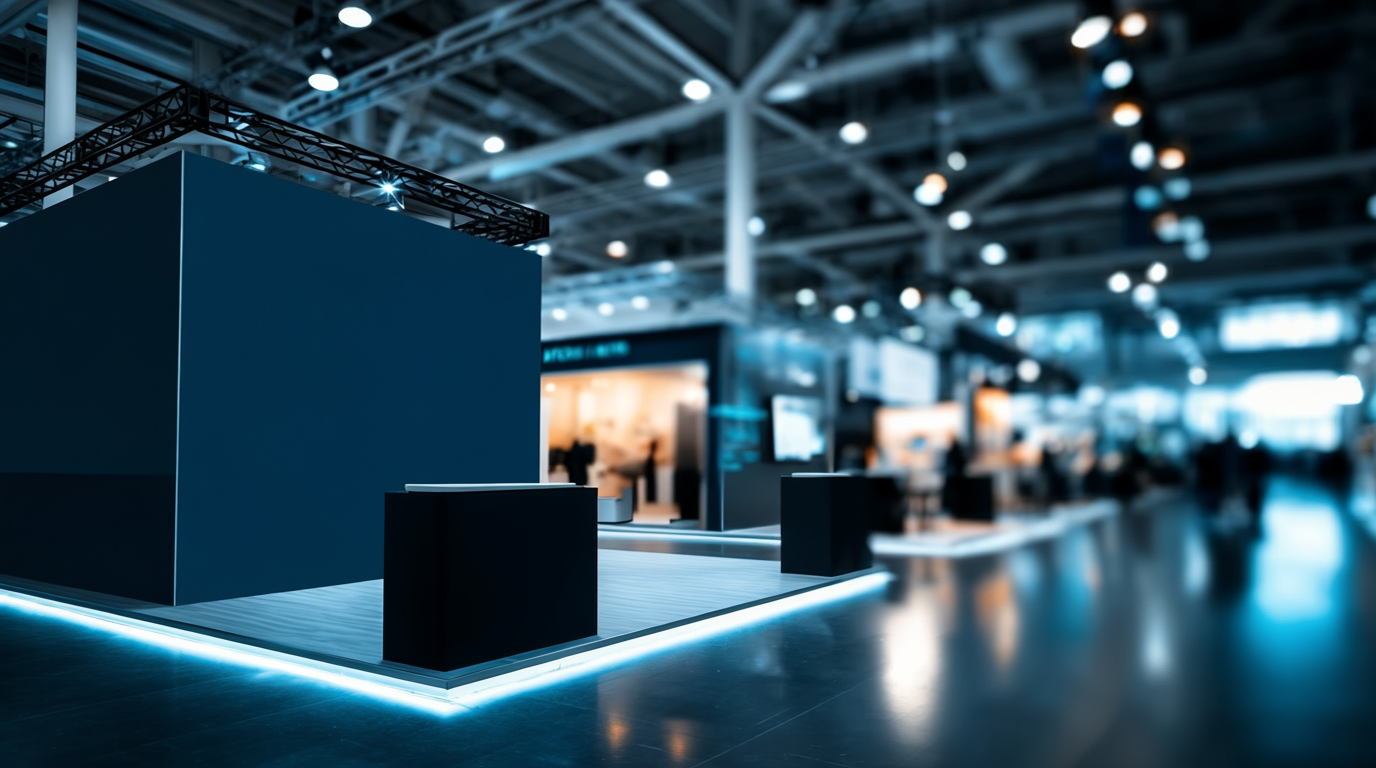
It was the very first booth you see when you walk into the exhibit hall; a large, “double sized” corner booth. In other words, prime real estate at any trade show, and a place that vendors typically pay a premium to set up shop in.
The booth itself was fully assembled – 2 podiums and a nice, large backdrop with clean branding. On that background, a confident headline promising the future of AI-driven marketing.
And for the entire time I was there…which was for around 4 hours…it was completely empty.
No staff. No flyers or hand out cards. No demonstrations. No business cards, no brochures, no pens, no candy…not even a lonely bowl of mints that someone picked up at the local Costco 5 minutes before the start of the show.
The only time I saw any attendees stop there at all was when they briefly used the empty podiums to rest for a moment or reorganize their swag bags so they could continue walking around the rest of the floor.
At first, it seemed strange, but then it became fascinating.
Because that empty booth unintentionally became a living example of one of the most important truths about marketing…
Automation Cannot Replace the Human Touch.
The message on this vendor’s booth display promised that AI would help businesses “Work less and accomplish more.”
That sounds appealing, of course. Efficiency is a powerful promise. And who among us doesn’t want to be more efficient?
But in this booth…it seemed that the company had taken the phrase “Work less…” and ran with that – and the concept of automation – a bit too far.
There was no one at the booth to answer questions. No one to explain what made their approach different. No one to start a conversation.
The lack of people there to engage with the audience made the booth – despite its clean design and confident message – feel invisible.
At a trade show, invisibility is the worst possible outcome.
The Contrast Was Impossible to Miss
Directly across the aisle at this show was a booth from Dell. Yes, THAT Dell…the company that makes computers.
Dell is a global company. They have been around for a long time. Everyone – whether they are a business owner or not – knows who Dell is and what they do.
It goes without saying that…Dell really didn’t need to be there, but yet, they were. And their booth was one of the busiest ones I saw at this show. They had several employees working the crowd, demonstrating products, answering questions, and engaging with attendees.
They had several giveaways – lip balm, mints, pens, notepads, tote bags. Nothing extravagant, but enough to spark conversations and create small moments of connection, even if it was just a “Thank you” from someone taking a trinket back with them emblazoned with the Dell logo.
People stopped, and so did I, mostly to look at their booth design, which was also very nice and eye-catching. A friendly employee greeted me and offered me a bag which they had pre-filled with each of their giveaway items. I gave him an honest, full disclosure – I’m a diehard Mac user, and have been for decades. I’m probably not buying a Dell computer anytime soon. He laughed and told me to enjoy the free goodies anyway, and to let him know if he could help with anything.
As I continued to look around the booth, I watched what he and the others were doing with each visitor that stopped in. They approached people and introduced themselves…they made small talk. They asked the visitors questions and answered theirs. They engaged with just about everyone, and there were postcards, flyers, folders, and business cards for people to take with them.
In other words, marketing was happening in several different ways at that booth.
The difference between this booth and the first one I described wasn’t budget, or brand recognition, or even visibility. Dell was in the same “premium” spot that this other company was.
The difference was engagement. Dell was doing it at this show, and they were doing it well. Even if they did not sell a single computer that day, they achieved a thing that sometimes is far more valuable than the price they paid for that booth: They made everyone who stopped by their booth feel welcome. Those people all walked away with a positive feeling about Dell as a company.
The other company? Not so much. The fact that nobody showed up for this show…not a single human representative from the company…sends the opposite message. It basically says “We can’t be bothered to show up to try to tell you about our product, or why it’s great. So if you choose to buy from us, you can definitely not count on us to show up once you are a customer and/or you need help, either.”
That may sound harsh but…it’s the truth. In the age of everything being automated, actual human connection sends a powerful message. This company unfortunately missed that mark in a major way.
Trade Shows Are Not QR Code Scavenger Hunts
The empty booth did have ONE thing in it that was worth mentioning. A very large QR code printed on the last panel of the backdrop.
Presumably, the idea was that attendees would scan it, explore the service later, and eventually become customers.
I will be honest here – I didn’t see anyone scan in the time I stood there watching people stop at their tables just to put their swag bag down. Ironically, as I walked past I observed one gentleman in particular glance around at the booth…look right past the QR code…and look down at his phone with his back to the whole booth as he checked his texts. Ouch.
This booth was relying almost entirely on a QR code to do not just the heavy lifting, but ALL the lifting.
The problem is that…trade shows just don’t work that way. And no matter how much innovation exists, that is not likely to ever change.
Trade shows are environments which are purposely built around human interaction.
People attend them to:
- Ask questions
- See demonstrations
- Compare options
- Have conversations
- Build trust
They go there as human beings to speak to other human beings and ask questions about how they, the attendee, can benefit from the exhibitors’ products or services.
As a vendor, your goal is to answer those questions, give the demonstrations, and show attendees why your company is the right choice. Giveaways, raffles, and freebies are great for getting people to stop — but they are largely incidental to that core purpose.
A QR code is fairly commonplace these days. People understand them and know how they work. So, they can certainly support trade show interactions. In fact, many of the vendors I saw with busy booths had QR codes displayed that directed people to download a sales brochure with more information, etc. It was a nice “cover all the bases” technique for people who don’t want to carry around a stack of brochures but still wants to know what you offer.
Those QR codes are good supplements to your human interactions. But it cannot replace them.
Marketing has always been about reducing uncertainty. Human conversation is one of the fastest ways to do that.
AI Can Execute. It Cannot Replace.
To be clear, this isn’t a criticism of AI itself.
AI is a powerful tool. Used properly, it can help businesses generate ideas faster, produce content more efficiently, and manage tasks that would otherwise consume enormous amounts of time.
But tools are not strategies. And automation is not marketing.
What I saw at that trade show reflects a growing pattern: the assumption that technology alone can replace the human elements of marketing.
It absolutely cannot.
AI can help execute marketing. But it still needs:
- Positioning
- Differentiation
- Messaging clarity
- Engagement
- Strategic oversight
Without those elements, even using the latest in technology can still make your marketing message ineffective and relegated to being “boring background noise” that sounds like everybody else. This is, of course, the last thing you want your business to be known for: “ABC Company. Just like XYZ Company, but with more yellow in our logo!”
The empty booth was a small moment at a busy trade show, but it illustrated something important.
Marketing still requires humans. No AI engine can replace the authenticity of one person having a real conversation with another.
The tools we use to make those connections may evolve. Human psychology does not. This is why, no matter what advances in technology may come, nothing will ever be more important than people understanding other people.